120 E Grand Avenue #8 New Mexico 88101
6 Severe Anxiety Symptoms That Warrant a Doctor's Visit at Lyte Pychiatry (Affordable Therapist and Psychiatrist Near You) Dallas & Texas.
Tue May 05 2026
6 Severe Anxiety Symptoms That Warrant a Doctor’s Visit at Lyte Psychiatry
When anxiety feels bigger than you can manage alone, compassionate care is available in Pantego, TX.
Anxiety can feel exhausting, scary, and lonely. You may notice your heart racing, your thoughts spiraling, or your body staying tense even when you are trying hard to relax. For some people, anxiety comes and goes. For others, it begins to affect sleep, work, school, relationships, and daily routines.
It is important to know this: struggling with anxiety does not mean you are weak. Anxiety is a real mental health concern, and many people experience it at different stages of life. Occasional worry is normal, but intense, ongoing fear or panic may be a sign that it is time to seek professional support.
In this blog, we will cover what severe anxiety can look like, six symptoms that may warrant a doctor’s visit, how anxiety can impact daily life, coping tools that may help, and when to contact Lyte Psychiatry at 469-733-0848 for care.
What Severe Anxiety Is and Who It Can Affect
Anxiety is the body’s natural alarm system. It can help you stay alert before a test, interview, medical appointment, or big life change. But when that alarm keeps going off when there is no clear danger, it can become overwhelming.
Severe anxiety can affect children, teens, adults, parents, students, professionals, caregivers, and older adults. It can appear after stress, trauma, illness, major life transitions, grief, relationship problems, or sometimes with no obvious trigger. Anxiety can also show up in the body, not just the mind.
People with severe anxiety may feel trapped in a cycle of worry, fear, and physical discomfort. Some may avoid places, people, driving, work tasks, or social settings because they fear symptoms will return. NIMH describes panic attacks as sudden episodes of overwhelming fear that may include feeling out of control, fear of dying, rapid heartbeat, sweating, trembling, or shortness of breath.
6 Severe Anxiety Symptoms That Should Not Be Ignored
Not every anxious feeling requires urgent care. But some symptoms are strong signs that a medical or mental health professional should evaluate what is happening.
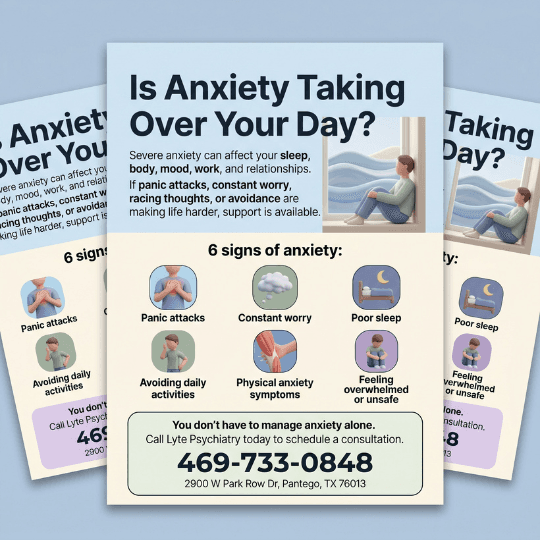
1. Chest pain, shortness of breath, or a racing heart: Anxiety and panic can cause intense physical symptoms, including chest tightness, a pounding heart, dizziness, or trouble breathing. These symptoms can feel frightening and may resemble other medical problems. If you have chest pain, trouble breathing, fainting, or symptoms that feel new or severe, seek emergency medical care right away.
2. Repeated panic attacks: A panic attack can feel like a sudden wave of terror. You may feel shaky, sweaty, dizzy, detached from reality, or afraid something terrible is about to happen. If panic attacks happen more than once, or you start fearing the next one, it is time to talk with a professional. Mayo Clinic advises seeking medical help as soon as possible for panic attack symptoms because they can be hard to manage alone and may worsen without treatment.
3. Anxiety that disrupts work, school, parenting, or relationships: Severe anxiety can make everyday tasks feel impossible. You may miss work, avoid calls, cancel plans, struggle to focus, or feel irritable with people you love. When anxiety starts shaping your choices or limiting your life, support can help you regain stability.
4. Avoiding normal activities because of fear: Avoidance may bring short-term relief, but over time it can make anxiety stronger. You may avoid driving, shopping, public places, social events, medical visits, or being alone. Professional care can help you understand these patterns and slowly rebuild confidence in a safe, supportive way.
5. Sleep problems, stomach issues, muscle tension, or constant restlessness: Anxiety often affects the whole body. You may have trouble falling asleep, wake up with racing thoughts, feel tense, have headaches, experience stomach upset, or feel like you cannot sit still. When these symptoms continue for days or weeks, they can drain your energy and make anxiety harder to manage.
6. Thoughts of self-harm, hopelessness, or feeling unsafe: If anxiety comes with thoughts of harming yourself, feeling like you cannot go on, or feeling unsafe, get help immediately. In the U.S., you can call or text 988 for 24/7 mental health crisis support.
How Severe Anxiety Can Impact Daily Life
Severe anxiety can make the world feel smaller. You may plan your day around avoiding triggers. You may feel tired from pretending everything is fine. You may want connection but feel too overwhelmed to answer messages, attend events, or explain what you are going through.
Anxiety can also affect decision-making. Simple choices may feel heavy. Your mind may jump to worst-case scenarios, making it hard to trust yourself. Over time, this can lead to frustration, guilt, shame, and isolation.
At Lyte Psychiatry, anxiety is treated with compassion, not judgment. The goal is not to “just calm down.” The goal is to understand what is happening, reduce symptoms, and help you feel more in control of your life again.
Coping Strategies That May Help While You Seek Support
Coping tools are not a replacement for professional care, but they can help calm your nervous system in the moment.
1. Start with slow breathing. Try inhaling gently through your nose, pausing, and exhaling longer than you inhale. This can help signal safety to your body. Grounding can also help. Look around and name five things you see, four things you feel, three things you hear, two things you smell, and one thing you taste.
2. Progressive muscle relaxation may also reduce tension. This means slowly tensing and relaxing muscle groups in your body, which can help you notice the difference between stress and release. The American Psychiatric Association describes progressive relaxation as a way to become more aware of tension and relaxation in the body.
3. Therapy can also teach practical skills for anxious thoughts. Cognitive behavioral therapy, often called CBT, helps people notice unhelpful thought patterns and respond to them in healthier ways. The American Psychological Association describes CBT as a psychological treatment shown to be effective for a range of concerns.
When and Why to Seek Professional Help?
You should consider reaching out when anxiety feels intense, frequent, confusing, or hard to manage alone. A professional can help determine whether symptoms may be related to anxiety, another mental health concern, a medical issue, medication effects, substance use, or stress overload.
At Lyte Psychiatry, care may include therapy, counseling, psychiatric evaluation, medication management when appropriate, coping skills, and support from licensed professionals. You do not need to wait until things feel unbearable. Getting help early can prevent symptoms from becoming more disruptive.
Professional support can help you feel heard, understand your symptoms, and create a plan that fits your life.
Schedule an Appointment Near You at Lyte Psychiatry (Best Adults and Adolescents Therapist and Psychiatrist Near You)
Reaching out for help takes courage, especially when anxiety has made you feel overwhelmed or alone. You do not have to face this by yourself. Lyte Psychiatry, located at 2900 W Park Row Dr, Pantego, TX 76013, offers compassionate therapy, counseling, and psychiatric support for people struggling with anxiety.
Frequently Asked Questions:
Q: How do I know if my anxiety is severe enough to see a doctor?
A: If anxiety is affecting your sleep, work, school, relationships, appetite, health, or ability to complete daily tasks, it is worth seeking help. You do not have to prove that your anxiety is “bad enough.” If you feel overwhelmed or stuck, support can help. A professional can help you understand what is happening and what steps may help you feel better.
Q: Are panic attacks dangerous?
A: Panic attacks can feel very scary, but they are often not physically dangerous by themselves. However, symptoms like chest pain, shortness of breath, fainting, or a racing heart should be taken seriously, especially if they are new or severe. It is important to rule out medical causes. After that, treatment can help reduce panic symptoms and fear of future attacks.
Q: Can therapy really help with severe anxiety?
A: Yes, many people benefit from therapy for anxiety. Therapy can help you understand triggers, calm your body, challenge anxious thoughts, and reduce avoidance. CBT and other evidence-based approaches can be especially helpful. Your therapist can work with you at a pace that feels safe and realistic.
Q: Will I need medication for anxiety?
A: Not everyone needs medication, but some people find it helpful. A psychiatric provider or nurse practitioner can talk with you about your symptoms, health history, and treatment options. Medication decisions should be personal, informed, and made with a licensed professional. Therapy, lifestyle support, and coping skills may also be part of your care plan.
Q: What should I do if anxiety makes me feel unsafe?
A: If you feel at risk of harming yourself or someone else, call 911 or go to the nearest emergency room. You can also call or text 988 in the U.S. for crisis support. You deserve immediate help and compassionate care. After the crisis has passed, ongoing therapy or psychiatric care can help you build a longer-term support plan.