120 E Grand Avenue #8 New Mexico 88101
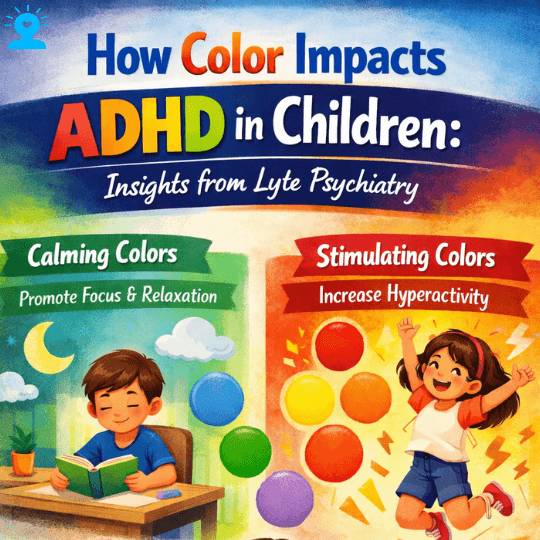
How Color Impacts ADHD in Children: Insights from Lyte Psychiatry, Best Adults and Adolescents Therapist & Psychiatrist Near You (Affordable Therapist and Psychiatrist Near You)
Wed Feb 18 2026
How Color Impacts ADHD in Children: Insights from Lyte Psychiatry
Best Adults and Adolescents Therapist & Psychiatrist Near You
Children with Attention-Deficit/Hyperactivity Disorder (ADHD) often experience the world differently including how they respond to color, lighting, and visual environments. While color may seem like a small detail, research shows that environmental factors can significantly influence attention, mood, behavior, and learning outcomes in children with ADHD.
At Lyte Psychiatry, we help families understand how everyday factors like classroom design, home environments, and sensory input can support children with ADHD alongside therapy and medical care.
Understanding ADHD in Children
ADHD is a neurodevelopmental condition that affects attention regulation, impulse control, and activity levels.
ADHD by the Numbers
Approximately 9–11% of children in the United States are diagnosed with ADHD.
Boys are diagnosed more frequently, but ADHD is often underrecognized in girls.
Children with ADHD often have heightened sensory sensitivity, meaning visual stimuli especially color can either help focus or increase distraction.
Why Color Matters for Children with ADHD
The brain processes color through pathways connected to emotion, alertness, and attention. Certain colors can stimulate the nervous system, while others promote calmness and concentration.
Children with ADHD may be more sensitive to:
2. Overstimulating visual environments
3. Cluttered or highly colorful spaces
A thoughtfully designed environment can reduce overstimulation and improve focus.
How Different Colors Affect ADHD Symptoms
🔵 Blue: Promotes Calm and Focus
Blue tones are often associated with relaxation and improved concentration.
Benefits may include:
Improved sustained attention
Soft blues are commonly recommended for study spaces or bedrooms.
🟢 Green: Supports Balance and Learning
Green is linked to nature and visual comfort.
Research suggests green environments can:
Improve reading comprehension
Adding plants or green accents can help create a calming atmosphere.
🟡 Yellow: Encourages Energy (in Moderation)
Yellow stimulates mental activity and creativity but can become overwhelming if too bright.
Best practices:
Avoid excessive bright yellow walls or décor
Small accents work better than full-room saturation.
🔴 Red: Increases Alertness but May Raise Impulsivity
Red is stimulating and attention-grabbing, which can sometimes increase restlessness in children with ADHD.
Recommendations:
Avoid large red surfaces in study areas
Reserve for small motivational accents
⚪ Neutral Colors: Reduce Distraction
Soft neutrals like beige, gray, or off-white help minimize sensory overload.
Neutral backgrounds allow children to focus without competing visual stimuli.
How Parents Can Use Color Strategically at Home
You don’t need a complete home redesign to support your child.
Simple changes include:
Creating a calm-colored homework area
Using color-coded organization systems
Choosing soft lighting instead of harsh fluorescent lights
Adding natural elements like plants or sunlight
Small environmental adjustments can make daily routines easier for children with ADHD.
Color Is Helpful But Not a Standalone Treatment
While environmental adjustments can help, color alone does not treat ADHD. Effective care typically includes a combination of:
Parent and child education
Medication management (when appropriate)
Emotional and social skill development
At Lyte Psychiatry, treatment plans are personalized to address each child’s unique needs.
Support Your Child’s Focus and Well-Being Today at Lyte Psychiatry (Best Adults and Adolescents Therapist and Psychiatrist)
Creating supportive environments is an important step but professional guidance can make an even greater impact. With the right combination of therapy, education, and treatment, children with ADHD can thrive.
If you’re concerned about ADHD symptoms or want expert guidance, reach out to Lyte Psychiatry today. Our experienced therapists and psychiatrists are here to support your child and family every step of the way.
Schedule an appointment with Lyte Psychiatry and help your child build focus, confidence, and success. Click Here
Frequently Asked Questions (FAQ)
Q: Can colors really affect ADHD behavior?
A: Yes. Colors influence mood and attention levels, which can impact focus and overstimulation in children with ADHD.
Q: What is the best color for an ADHD study space?
A: Soft blues, greens, and neutral tones are generally most helpful for focus and calmness.
Q: Should I repaint my child’s entire room?
A: Not necessarily. Small adjustments like décor, lighting, and organization can make a meaningful difference.
Q: Do all children with ADHD respond the same way to color?
A: No. Each child is unique, and preferences and sensitivities vary.
Q: When should I seek professional ADHD support?
A: If attention, behavior, or emotional challenges interfere with school or daily life, a professional evaluation can help.